Few aspects of academic writing generate as much confusion and frustration among students as referencing styles. With multiple systems in use across different disciplines and institutions, each with its own specific rules for formatting citations, it is easy to feel overwhelmed. This guide explains the major referencing styles, their key differences, and how to determine which one you should be using.
Why Referencing Styles Exist
Before diving into the specifics of each style, it is worth understanding why these systems exist at all. Referencing styles serve several important functions: they give proper credit to the original authors of ideas, data, and quotations you use in your work; they allow readers to locate and verify your sources; they demonstrate the breadth and credibility of the research underpinning your argument; and they help prevent plagiarism by clearly distinguishing your own ideas from those you have drawn from others.
Different academic disciplines developed different referencing conventions over time, largely reflecting the specific needs and traditions of those fields. Understanding these differences helps explain why a single universal system was never adopted, and why the specific style you should use depends heavily on your discipline and institution.
APA Style: The Standard for Social Sciences
APA style, developed by the American Psychological Association, is the dominant referencing style in psychology, education, sociology, nursing, and many other social science disciplines. It is also widely used in business and some scientific fields.
APA uses an author-date citation system, meaning in-text citations include the author’s surname and the year of publication, such as (Smith, 2021). When directly quoting, a page number is also included, such as (Smith, 2021, p. 45). This system allows readers to quickly identify both the source and its relative currency directly within the text, without needing to check a footnote or endnote.
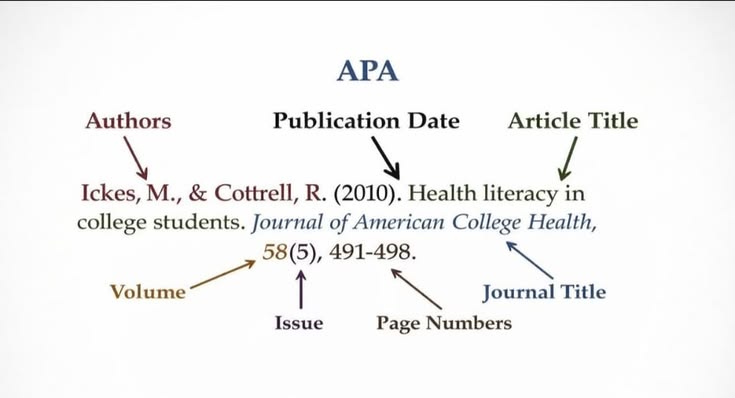
APA’s full reference list, titled “References,” is organized alphabetically by author surname and includes specific formatting for different source types. A typical journal article reference includes the author’s surname and initials, publication year in parentheses, article title in sentence case, journal name in italics and title case, volume and issue number, and page range, followed by a DOI if available.
APA style places significant emphasis on the publication date, reflecting the social sciences’ concern with current, up-to-date research, which is why the year appears prominently in both in-text citations and reference list entries. APA also has specific conventions for headings, abstracts, and overall paper structure that go beyond simple citation formatting, making it as much a comprehensive writing style guide as a referencing system.
MLA Style: The Standard for Humanities
MLA style, developed by the Modern Language Association, is most commonly used in literature, languages, cultural studies, and other humanities disciplines. It reflects the particular needs of scholars who frequently engage in close analysis of specific texts.
MLA uses an author-page citation system rather than author-date, since the humanities generally place less emphasis on the currency of a source and more emphasis on precisely locating the specific passage being discussed. A typical MLA in-text citation looks like (Smith 45), without a comma between the author’s name and the page number, and without the publication year appearing in the in-text citation at all.
MLA’s reference list, titled “Works Cited,” is also organized alphabetically by author surname. A typical entry includes the author’s full name (surname first), the title of the work in italics or quotation marks depending on the type of source, the container (such as a journal or book title) in italics, and other publication details including publisher, publication date, and page numbers, formatted in a specific sequence.
MLA style tends to emphasize the source itself, particularly the author and title, over publication date, reflecting the humanities’ focus on textual analysis and interpretation rather than the currency of scientific findings.
Harvard Style: A Flexible Author-Date System
Harvard style, widely used across many disciplines and particularly common in the United Kingdom, Australia, and other regions, is similar in structure to APA but has some notable differences and, importantly, is not governed by a single central organization in the way APA and MLA are. This means “Harvard style” can vary somewhat between institutions, making it particularly important to check your specific university or department’s style guide.
Like APA, Harvard uses an author-date in-text citation system, typically formatted as (Smith, 2021) or occasionally without the comma, depending on the specific institutional variant. The reference list, sometimes titled “References” and sometimes “Bibliography” depending on institutional convention, is organized alphabetically by author surname.
A typical Harvard-style journal article reference includes the author’s surname and initials, publication year in parentheses, article title (sometimes in quotation marks, depending on the variant), journal name in italics, volume and issue number, and page range. Because Harvard style is not standardized by a single central body, students should always consult their specific institution’s style guide rather than assuming a generic version applies.
Harvard style is popular across a wide range of disciplines, including business, economics, and many sciences, largely because its author-date structure works well for fields where the currency of research matters, while its flexibility has allowed individual institutions to adapt it to their specific needs.
Chicago Style: Two Systems for Different Needs
Chicago style, developed by the University of Chicago Press, is somewhat unique among major referencing styles because it actually offers two distinct citation systems, and choosing the right one depends on your discipline and specific assignment requirements.
The Notes-Bibliography system is commonly used in history, art history, and some other humanities disciplines. This system uses footnotes or endnotes for in-text citations, with a full citation provided in the note the first time a source is referenced, and a shortened version for subsequent references to the same source. A full bibliography is also typically included at the end of the document, organized alphabetically by author surname.
The Author-Date system, more similar in structure to APA and Harvard, is commonly used in the sciences and social sciences when Chicago style is required. This system uses in-text parenthetical citations formatted as (Smith 2021), and a reference list at the end of the document.
Because Chicago style offers these two distinct systems, it is particularly important to confirm with your instructor or institution which specific version is expected, since simply citing something as “Chicago style” without specifying Notes-Bibliography or Author-Date leaves considerable ambiguity.
Key Differences at a Glance
While the specific formatting details of each style are extensive, a few key structural differences help clarify when and why each is used. APA and Harvard both use author-date in-text citations and are common in the social sciences and business, with APA being more standardized globally and Harvard varying more by institution. MLA uses author-page in-text citations and is the standard for literature and humanities disciplines focused on close textual analysis. Chicago offers both a footnote-based system common in history and some humanities fields, and an author-date system similar to APA, common when Chicago is required in science and social science contexts.
Beyond in-text citations, each style also has distinct conventions for reference list formatting, including capitalization rules for titles, the use of italics versus quotation marks for different source types, and the specific order and punctuation of publication details.
How to Determine Which Style You Should Use
The most important factor in choosing a referencing style is simply following the specific requirement given by your instructor, course, or institution. Academic referencing styles are not a matter of personal preference; they are typically mandated by your specific assignment, department, or discipline.
Check your assignment brief, course syllabus, or department style guide first, since this will almost always specify the required style explicitly. If no style is specified and you are given a choice, consider your discipline’s general convention: social sciences typically favor APA, humanities typically favor MLA, and history in particular often favors Chicago’s Notes-Bibliography system. If in doubt, ask your instructor directly rather than guessing, since using the wrong referencing style can affect your grade even when your actual research and argument are strong.
Common Referencing Mistakes Across All Styles
Regardless of which specific style you are using, several common mistakes appear across student work in all systems. Inconsistency is one of the most frequent issues, where a student begins using one style correctly but drifts into inconsistent formatting partway through the document, particularly in longer papers written over multiple sessions.
Incomplete reference list entries, missing key details such as page numbers, publication dates, or DOIs, are another common issue, often resulting from incomplete note-taking during the research process rather than carelessness during the final writing and formatting stage. Mismatches between in-text citations and the reference list — where a source is cited in the text but missing from the reference list, or vice versa — are also common and are usually caught only through a dedicated, careful final check.
Using outdated style guide editions is another subtle but real issue, since referencing styles are periodically updated (APA, for example, has moved through several editions with meaningful formatting changes). Always confirm you are using the most current edition required by your institution.
Practical Tools for Managing Referencing
Given the complexity and detail involved in academic referencing, using dedicated tools can significantly reduce errors and save time. Citation management software such as Zotero, Mendeley, or EndNote can automatically format citations and reference lists in your chosen style, and many word processors include built-in citation tools as well. Most university libraries also provide detailed style guides and citation examples specific to the styles most commonly used within their institution, which are generally more reliable and up to date than generic online summaries.
Regardless of which tools you use, it remains good practice to manually check a sample of your citations against an official style guide, since automated tools, while helpful, are not always perfectly accurate, particularly for unusual source types.
Other Referencing Styles You May Encounter
While APA, MLA, Harvard, and Chicago cover the vast majority of academic referencing needs, other discipline-specific styles exist and may be required depending on your field. Vancouver style, common in medicine and the health sciences, uses a numbered citation system where sources are cited by number in the order they first appear, rather than by author name. IEEE style, common in engineering and computer science, similarly uses numbered in-text citations corresponding to a numbered reference list. OSCOLA, used in law, has its own specific conventions for citing cases, statutes, and legal commentary.
If your discipline uses one of these more specialized styles, the same underlying principles apply: consult an authoritative, current style guide specific to that system, apply it consistently, and check your institution’s specific expectations, since even these specialized styles can have institutional variations.
Final Thoughts
APA, MLA, Harvard, and Chicago each serve the same fundamental purpose — giving credit to sources and allowing readers to verify your evidence — but they do so through distinct conventions shaped by the specific needs and traditions of different academic disciplines. Rather than viewing these differences as arbitrary obstacles, understanding why each style developed the way it did can make the sometimes tedious process of formatting citations feel more purposeful. Above all, always confirm the specific style required for your particular assignment, apply it consistently throughout your document, and use available tools and guides to catch errors before submission.