Artificial intelligence has moved rapidly from an emerging curiosity to a genuinely transformative force reshaping how websites are designed, built, and maintained. From AI-assisted design tools that generate layout suggestions in seconds to intelligent chatbots that handle customer inquiries around the clock, AI is changing not just how web professionals work, but what’s possible for businesses of every size to achieve online. This article explores the concrete ways AI is transforming web design and development today, along with a realistic look at where its capabilities still fall short of replacing genuine human expertise.
AI-Assisted Design Tools
One of the most visible ways AI is transforming web design is through tools that generate design suggestions, layouts, and even complete visual mockups based on simple prompts or basic input parameters. These tools can analyze a business’s industry, target audience, and stated preferences to suggest color palettes, typography pairings, and layout structures that align with current design trends and established principles of visual hierarchy and usability.
For designers, these tools often serve as a powerful starting point or brainstorming aid, generating initial concepts that can then be refined and customized rather than starting completely from a blank canvas. This can significantly speed up the early ideation phase of a design project, allowing designers to explore more variations more quickly than manual design work alone would typically allow.
For businesses without access to professional design resources, AI design tools have also made it possible to generate reasonably polished visual concepts independently, lowering the barrier to entry for creating a professional-looking website, even without deep design expertise.
AI in Code Generation and Development
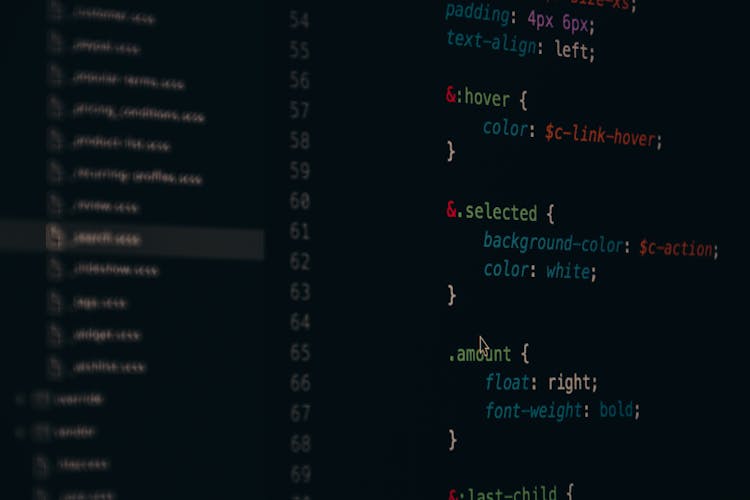
AI-powered coding assistants have become an increasingly integrated part of how developers write code, including the frontend and backend code that powers websites. These tools can generate functional code snippets based on natural language descriptions, suggest completions as a developer types, identify and help fix bugs, and even convert design mockups directly into working code in some cases.
This has meaningfully increased development speed and efficiency, allowing developers to spend less time on repetitive, boilerplate coding tasks and more time on the genuinely complex, creative problem-solving that requires deeper expertise and judgment. For simpler websites, AI code generation tools have also made it increasingly feasible for people with limited coding experience to build basic, functional websites independently.
However, AI-generated code isn’t infallible — it can contain errors, security vulnerabilities, or inefficient patterns that require experienced human review and correction. Developers using these tools effectively treat them as productivity-enhancing assistants requiring careful oversight, rather than fully autonomous replacements for genuine development expertise and judgment.
Personalization and Dynamic Content
AI has significantly expanded what’s possible in terms of personalizing website content and experiences for individual visitors. Rather than showing every visitor the exact same content, AI-powered personalization systems can analyze visitor behavior, preferences, and browsing history to dynamically adjust what content, product recommendations, or messaging a specific visitor sees.
This kind of personalization was previously available primarily to large companies with substantial data science resources, but AI-powered tools have made increasingly sophisticated personalization accessible to a much broader range of businesses. E-commerce websites, for example, can use AI to display personalized product recommendations based on a visitor’s browsing and purchase history, significantly improving the relevance of what’s shown and, often, conversion rates as a result.
AI Chatbots and Virtual Assistants
Perhaps one of the most widely adopted AI applications in web development is the integration of AI-powered chatbots and virtual assistants directly into business websites. These tools can handle a substantial portion of routine customer inquiries automatically, providing instant responses to common questions, guiding visitors through basic troubleshooting, or helping with simple tasks like scheduling appointments, all without requiring immediate human staff involvement.
Modern AI chatbots have become significantly more sophisticated than earlier rule-based systems, capable of understanding natural language more effectively and handling a broader range of inquiries with greater accuracy and nuance. For businesses, this can mean improved customer service availability — providing instant responses outside of normal business hours — combined with meaningful reductions in the routine workload placed on human customer service staff, who can then focus on more complex inquiries that genuinely require human judgment and empathy.
AI-Powered Testing and Quality Assurance
Website testing — checking for bugs, broken functionality, and performance issues across different browsers and devices — has traditionally been a time-consuming, labor-intensive process. AI-powered testing tools have begun to automate significant portions of this work, automatically identifying potential issues, testing across multiple device and browser combinations simultaneously, and even predicting where bugs are likely to occur based on patterns in the codebase.
This has meaningfully improved both the efficiency and thoroughness of website testing processes, allowing development teams to catch and address more issues before launch, while spending less time on the manual, repetitive aspects of comprehensive testing.
AI-Driven Accessibility Improvements
AI tools are increasingly being used to help identify and address website accessibility issues, automatically scanning websites for common problems like insufficient color contrast, missing image alt text, or improperly structured heading hierarchies that create barriers for users relying on screen readers or other assistive technologies.
Some AI tools can even generate suggested alt text for images automatically, or flag specific accessibility violations along with recommended fixes, making it easier for development teams to build more genuinely accessible websites without requiring every team member to have deep, specialized accessibility expertise.
AI in Content Creation for Websites
AI writing tools have become increasingly integrated into the website content creation process, helping generate initial drafts of website copy, product descriptions, blog content, and other written material. Used thoughtfully, these tools can significantly speed up content production, particularly for businesses needing to create large volumes of relatively similar content, such as product descriptions across an extensive e-commerce catalog.
That said, AI-generated content still generally requires careful human review and editing to ensure accuracy, appropriate brand voice, and genuine quality, since AI-generated text can contain factual errors or generic, superficial content that doesn’t fully capture what makes a specific business genuinely distinctive.
Predictive Analytics and User Behavior Insights
AI-powered analytics tools have significantly enhanced businesses’ ability to understand and predict visitor behavior on their websites. Beyond basic traffic metrics, AI can identify patterns and correlations in visitor behavior that might not be obvious through manual analysis, predicting which visitors are most likely to convert, identifying which specific elements of a page are most associated with visitors leaving without completing a desired action, and suggesting data-driven improvements based on these patterns.
This deeper level of insight allows businesses to make more informed, targeted decisions about website optimization, rather than relying purely on intuition or general best practices that may not fully account for their specific audience’s actual behavior patterns.
The Limitations of AI in Web Design and Development
Despite these substantial advances, AI has real limitations that are important to understand realistically. AI-generated design and code often lack the nuanced understanding of a specific business’s unique brand identity, strategic goals, and target audience that experienced human designers and developers bring to a project. AI tools tend to generate outputs based on patterns learned from existing data, which can result in generic, formulaic results that lack genuine originality or fail to fully capture what makes a specific business distinctive.
AI tools can also make mistakes — generating code with security vulnerabilities, design suggestions that don’t fully account for accessibility or usability best practices, or content that contains factual inaccuracies. Effective use of AI in web design and development generally requires experienced human oversight to catch and correct these issues, rather than treating AI output as inherently reliable without review.
Additionally, the genuinely complex, strategic aspects of web design and development — deeply understanding a specific business’s goals and audience, making thoughtful architectural decisions for complex, custom functionality, and creatively solving unique design and technical challenges — still benefit enormously from experienced human expertise and judgment that current AI tools cannot fully replicate.
The Emerging Collaborative Model
Rather than replacing human designers and developers entirely, AI is increasingly being integrated as a powerful collaborative tool that enhances human capability and efficiency. Designers use AI to rapidly generate initial concepts before applying their own expertise to refine and customize those concepts. Developers use AI coding assistants to handle routine, repetitive coding tasks, freeing up time and mental energy for more complex problem-solving. Businesses use AI-powered personalization and chatbot tools to enhance customer experience while human staff focus on higher-value, more complex customer interactions.
This collaborative model — AI handling routine, pattern-based tasks while human expertise remains essential for strategic thinking, creative problem-solving, and nuanced judgment — appears to represent the most realistic and effective trajectory for how AI continues to transform web design and development, rather than a wholesale replacement of human involvement in the process.
Final Thoughts
Artificial intelligence is genuinely transforming web design and development, from accelerating design ideation and code generation to enabling sophisticated personalization, more efficient testing, and enhanced accessibility. These tools offer real, substantial benefits in terms of speed, efficiency, and capability. At the same time, AI’s current limitations mean that experienced human designers and developers remain essential for ensuring genuinely high-quality, strategically sound, and truly distinctive results. For businesses and web professionals alike, understanding how to effectively leverage AI as a powerful collaborative tool — rather than either dismissing its capabilities or over-relying on it without appropriate oversight — represents the most effective path forward in this rapidly evolving landscape.