Nursing assignments occupy a distinctive space in higher education. They must satisfy the same rigorous academic standards as any other university assignment — clear structure, critical analysis, proper referencing — while also demonstrating something additional: safe, evidence-based clinical reasoning that reflects the standards of professional nursing practice. A nursing essay that reads beautifully but shows shallow clinical judgment will not pass, just as a clinically sound piece riddled with weak academic structure and poor referencing will lose significant marks. Meeting both standards simultaneously is the central challenge of nursing academic writing.
This guide walks through what markers are actually looking for in nursing assignments, how to structure common assignment types, and how to demonstrate the evidence-based clinical reasoning that distinguishes strong nursing writing from merely competent writing.
Understanding What Nursing Markers Are Looking For
Nursing programs assess student writing against professional as well as academic standards, because the ultimate goal is producing safe, competent practitioners, not just capable essay writers. This means markers are looking for several things simultaneously: academic rigor (structure, argument, referencing), clinical accuracy (correct use of terminology, accurate representation of conditions, treatments, and procedures), evidence-based reasoning (claims supported by current, credible research rather than opinion or outdated practice), and professional and ethical awareness (recognition of patient safety, dignity, confidentiality, and relevant professional codes of conduct, such as the NMC Code in the UK or equivalent standards elsewhere).
A nursing assignment on, say, pressure ulcer prevention needs to be more than an accurate description of what pressure ulcers are. It needs to demonstrate why a particular prevention strategy is evidence-based, how it aligns with current clinical guidelines, what the practical and ethical considerations of implementation are, and how it connects to your own developing clinical judgment.
Common Types of Nursing Assignments
Nursing programs use a range of assignment formats, and understanding which type you’re working with shapes how you should structure and approach the work.
Case study assignments ask you to analyze a patient scenario (real or simulated), applying nursing theory, clinical guidelines, and evidence to explain the patient’s condition, appropriate care interventions, and expected outcomes. Reflective assignments ask you to critically reflect on a clinical placement experience, typically using a structured model such as Gibbs’ Reflective Cycle, connecting personal experience to professional development and evidence-based practice. Literature review or evidence-based practice assignments ask you to critically evaluate a body of research on a specific clinical question, often using a structured framework like PICO (Population, Intervention, Comparison, Outcome) to focus your search and analysis. Care plan assignments ask you to develop a structured, evidence-based plan of nursing care for a patient scenario, typically following a recognized nursing process framework such as ADPIE (Assessment, Diagnosis, Planning, Implementation, Evaluation).
Each type has a somewhat different structure, but all share the same underlying requirement: every claim about clinical practice must be grounded in current, credible evidence, not assumption or anecdote.
Structuring a Nursing Case Study or Essay
A well-structured nursing essay or case study typically follows this pattern. An introduction briefly presents the patient scenario or clinical topic, states the purpose of the assignment, and previews the key areas you will address — this is often where you’ll also state any theoretical or clinical framework you’ll be applying throughout.
A patient or scenario overview section (in case study assignments) presents the relevant clinical information: presenting condition, medical history, relevant assessment findings, and psychosocial context, always maintaining patient confidentiality by using a pseudonym or generic identifier such as “Patient A,” in line with data protection and professional conduct standards.
The main analytical body addresses the core clinical question — this might cover assessment and diagnosis reasoning, prioritization of care needs, specific interventions and their evidence base, potential risks or complications, and how care aligns with relevant clinical guidelines (such as NICE guidelines in the UK or equivalent evidence-based protocols elsewhere). This section should integrate nursing theory and models explicitly — frameworks like Roper-Logan-Tierney’s Activities of Living model, Maslow’s Hierarchy of Needs (used cautiously and critically, given contemporary critiques of its universality), or condition-specific clinical pathways, depending on the scenario.
A conclusion summarizes the key clinical reasoning and its implications for practice, without introducing new information. Many nursing assignments also require an explicit link to professional standards or codes of conduct, demonstrating that your clinical reasoning aligns with the ethical and professional obligations of registered practice.
Demonstrating Evidence-Based Practice
Evidence-based practice is the backbone of contemporary nursing, and demonstrating it convincingly in your writing means going beyond simply citing a source — it means showing that you understand the strength and applicability of that evidence to the specific clinical situation you’re discussing.
When citing clinical research, briefly note the type of study (a randomized controlled trial carries more weight than a single case report, for instance) and its relevance to your specific scenario. Where national or institutional clinical guidelines exist (NICE, WHO, or specific hospital protocols), reference these directly, since they represent a synthesized, authoritative standard of care that individual studies alone do not provide.
Be explicit about the hierarchy of evidence where relevant — systematic reviews and meta-analyses generally represent stronger evidence than individual studies, which in turn represent stronger evidence than expert opinion or anecdotal reports. Demonstrating awareness of this hierarchy, and choosing your strongest available evidence rather than the first source you find, is a meaningful marker of academic and clinical maturity.
Using Nursing Terminology Correctly
Precision in clinical terminology matters enormously in nursing writing, both because inaccurate terminology signals a lack of clinical understanding and because, in professional practice, imprecise language can have real patient safety implications.
Use standardized terminology consistently — for instance, distinguish clearly between “signs” (objective, observable findings) and “symptoms” (subjective experiences reported by the patient), or between “acute” and “chronic” conditions where the distinction matters to your analysis. Avoid vague or colloquial descriptions of clinical presentations (“the patient seemed unwell”) in favor of specific, measurable observations (“the patient presented with a heart rate of 110 bpm and reported subjective breathlessness”).
When discussing medications, always use correct generic (and where relevant, brand) names, accurate dosage terminology, and correct routes of administration, since errors here — even in an academic assignment — reflect poorly on your developing clinical competence.
Writing Reflective Nursing Assignments
Reflective assignments deserve particular attention in nursing programs, since they are used extensively to assess professional development. Choose the reflective model specified in your brief, or if none is specified, select one appropriate to the depth required — Gibbs’ Reflective Cycle is particularly common in nursing programs due to its explicit structure covering description, feelings, evaluation, analysis, conclusion, and action plan.
Be honest about uncertainty, mistakes, or difficult emotional responses during the described clinical experience — nursing reflective assignments specifically value genuine critical self-examination over a sanitized account where everything proceeded perfectly. At the same time, always maintain patient confidentiality throughout, using pseudonyms and avoiding any identifying details, in line with professional and data protection standards.
Connect your reflection explicitly to evidence-based practice and professional standards, not just personal emotional processing — a strong nursing reflection shows how the experience shaped your clinical understanding and connects to a specific, actionable change in future practice, ideally referencing relevant literature or guidelines that inform that change.
Referencing and Academic Integrity in Nursing Writing
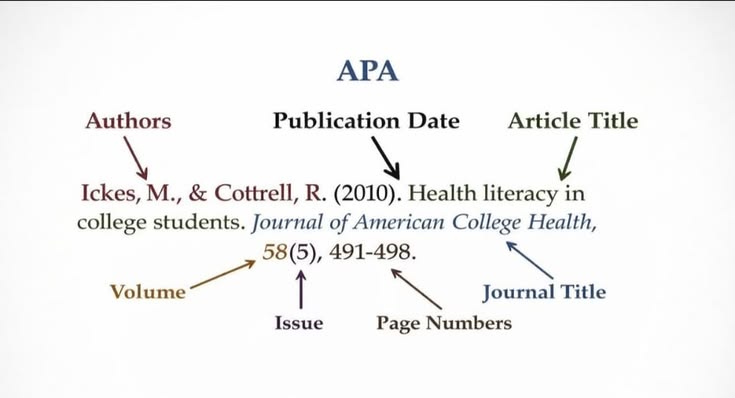
Nursing programs are typically strict about referencing standards, given the direct link between accurate source use and patient safety in professional practice. Use your institution’s specified referencing style consistently (commonly APA or Harvard in nursing programs), and ensure every clinical claim — particularly anything related to diagnosis, treatment, dosage, or intervention — is properly supported by a credible, current source.
Prioritize peer-reviewed journal articles, clinical practice guidelines from recognized bodies, and current textbooks over general websites or non-peer-reviewed sources. Pay close attention to source currency — clinical guidelines and best practice standards evolve, and citing outdated guidance (particularly anything superseded by more recent evidence) can be marked down even if the citation itself is technically correct.
Common Mistakes in Nursing Assignments
A frequent error is excessive description of a patient scenario or condition without sufficient analytical depth — markers want to see your clinical reasoning, not simply a textbook description of a disease process. As a general rule, description should establish the necessary context efficiently, while the majority of your word count should be devoted to analysis, evidence application, and clinical reasoning.
Another common mistake is failing to link theory and evidence explicitly to the specific scenario at hand. Simply stating “evidence-based practice is important in nursing care” without connecting it to the specific intervention or decision you’re discussing demonstrates weak analytical integration. Every piece of evidence you cite should be explicitly connected to the specific clinical reasoning you’re building.
Confidentiality breaches — including real names, specific dates, or identifying institutional details — are treated extremely seriously in nursing programs and can result in significant grade penalties or, in serious cases, academic misconduct proceedings, even in an anonymized academic assignment based on a real clinical placement. Always double-check that your scenario has been fully anonymized before submission.
Finally, some students under-integrate professional and ethical considerations, focusing purely on clinical or technical accuracy while neglecting to discuss patient dignity, informed consent, cultural sensitivity, or professional codes of conduct — all of which are usually expected components of a well-rounded nursing assignment.
A Practical Writing Process for Nursing Assignments
A reliable process for nursing assignments looks like this. First, carefully unpack the assignment brief and identify exactly which assignment type, structure, and marking criteria apply. Second, if working with a case study or clinical scenario, identify the key clinical issues and prioritize them using a recognized clinical reasoning or prioritization framework. Third, research current, credible evidence for each key issue, prioritizing clinical guidelines and high-quality studies. Fourth, draft your analysis section first, ensuring each clinical claim is explicitly supported by evidence, before drafting your introduction and conclusion. Fifth, review your draft specifically for anonymization, correct clinical terminology, referencing accuracy, and explicit connection to professional standards, in addition to standard structural and grammatical proofreading.
Integrating Person-Centered Care into Your Writing
Contemporary nursing education places heavy emphasis on person-centered care — the principle that care should be organized around the individual patient’s needs, values, and preferences, rather than around a standardized, one-size-fits-all clinical protocol. This principle needs to be visible in how you write about patients, not just stated as an abstract value.
In practice, this means going beyond a purely biomedical description of a patient’s condition to also address psychosocial, cultural, and individual factors relevant to their care. If you are discussing pain management for a patient scenario, for instance, a person-centered approach considers not just the pharmacological intervention but also the patient’s own reported pain experience, cultural attitudes toward pain expression, any anxiety or fear affecting their experience, and their own preferences regarding treatment options. Demonstrating this broader awareness throughout your writing — rather than treating psychosocial considerations as an afterthought tacked onto a mainly biomedical discussion — is often specifically assessed in nursing marking criteria and reflects the holistic model of care nursing programs are training you toward.
Working with Word Limits Across Multiple Sections
Nursing assignments often impose fairly tight word limits relative to the number of distinct areas they expect you to cover — a single assignment might need to address patient assessment, prioritization, at least two or three evidence-based interventions, risk considerations, and professional standards, all within 2,000 to 3,000 words. Managing this effectively requires deliberate planning before you start writing.
A practical approach is to draft a rough word budget for each section before you begin, based on the relative weighting suggested by your marking rubric, and revisit that budget as you draft to ensure no single section is consuming a disproportionate share of your word count at the expense of others. It’s common for students to write an overly long, descriptive patient background section, leaving too little room for the evidence-based analysis that carries the most marks — reviewing your draft specifically against your planned word budget helps catch this imbalance before submission, and reallocating words from descriptive sections toward analytical ones is usually the single most effective editing step you can take in a word-limited nursing assignment.
Final Thoughts
Nursing academic writing sits at the intersection of scholarly rigor and professional competence, and strong nursing assignments demonstrate both simultaneously — a clearly structured, well-referenced piece of academic work that also reflects the evidence-based, patient-centered, ethically grounded clinical reasoning expected of a safe, competent practitioner. Mastering this balance is not simply about earning good grades; it is direct preparation for the kind of careful, evidence-based thinking that underpins safe and effective nursing practice throughout your career.